
the yellow-star houses of budapest
" Where barely any archival images or visible clues remain, what visual languages are available to portray acts of unspeakable, organised violence carried out against a large section of the community in a major modern metropolis? How can we read and understand the afterlife of atrocity in the contemporary urban environment? Nigel’s photographs provide one answer to these questions. They allow us to picture the human lives and deaths that these yellow-star house doors conceal."
Dr Gwen Jones
Open Society Archives, Budapest 4 December 2014
The Yellow-Star Houses of Budapest
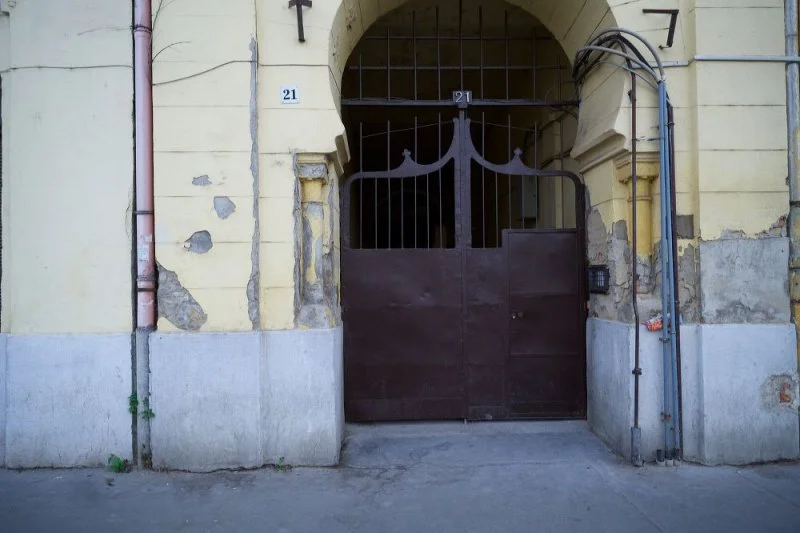
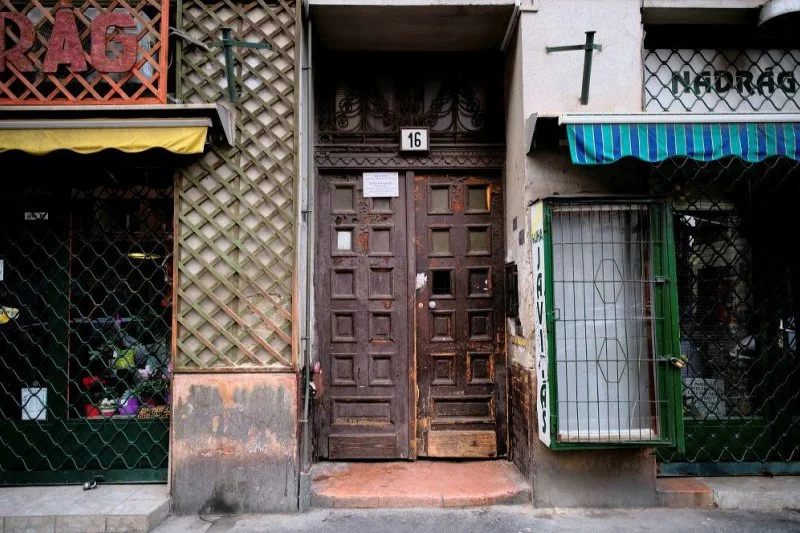
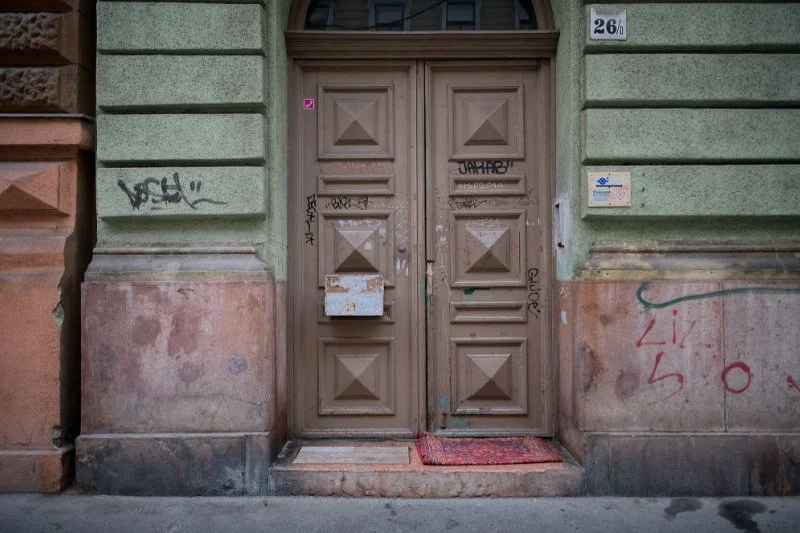
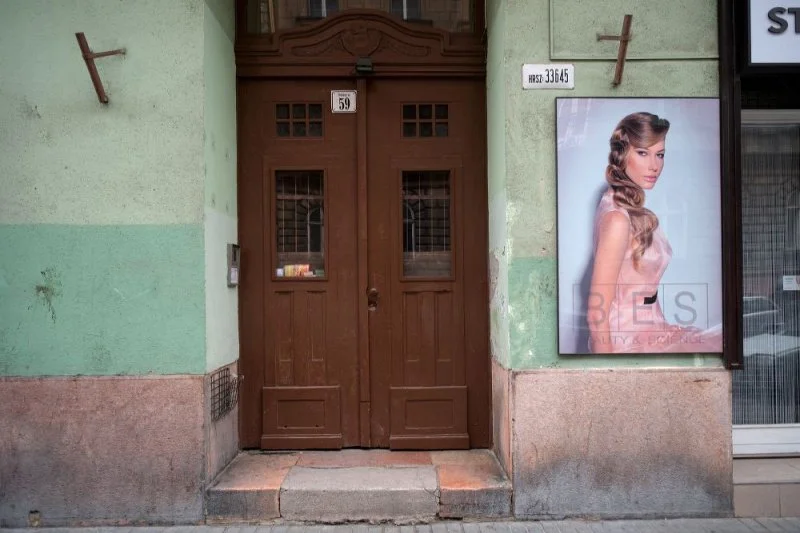
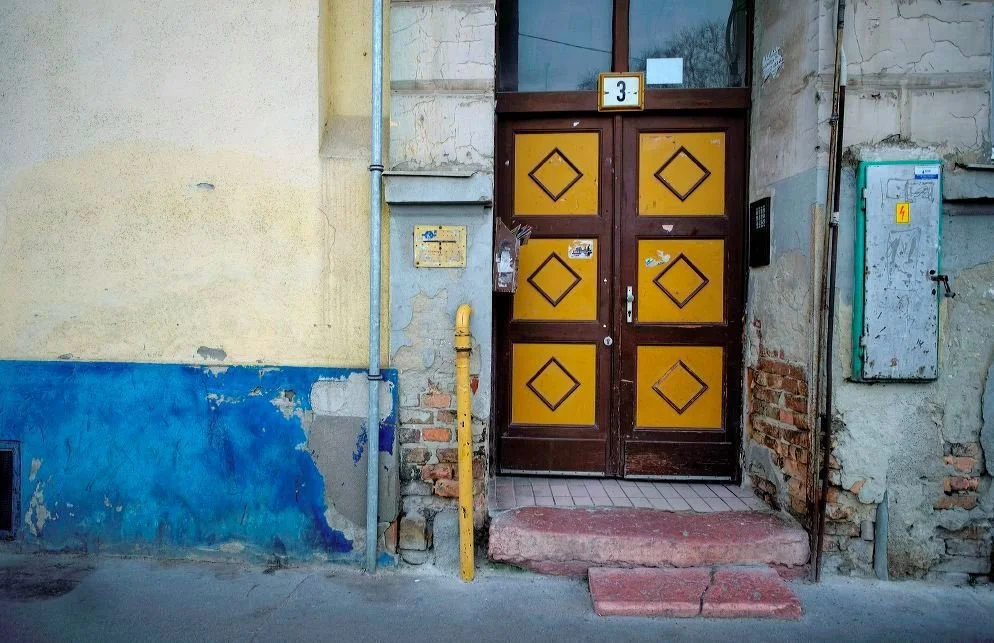
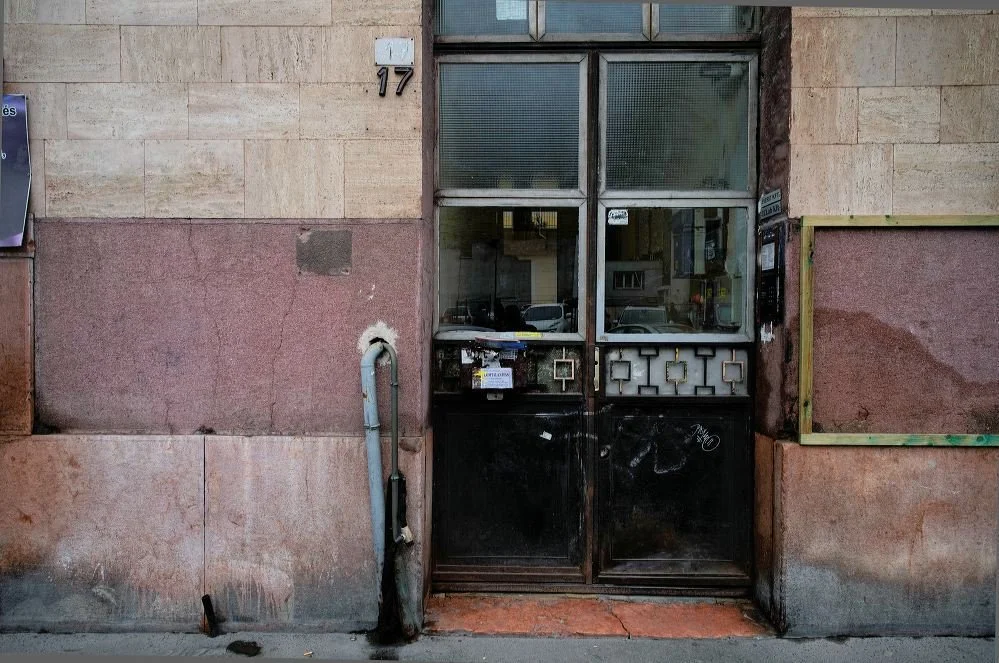
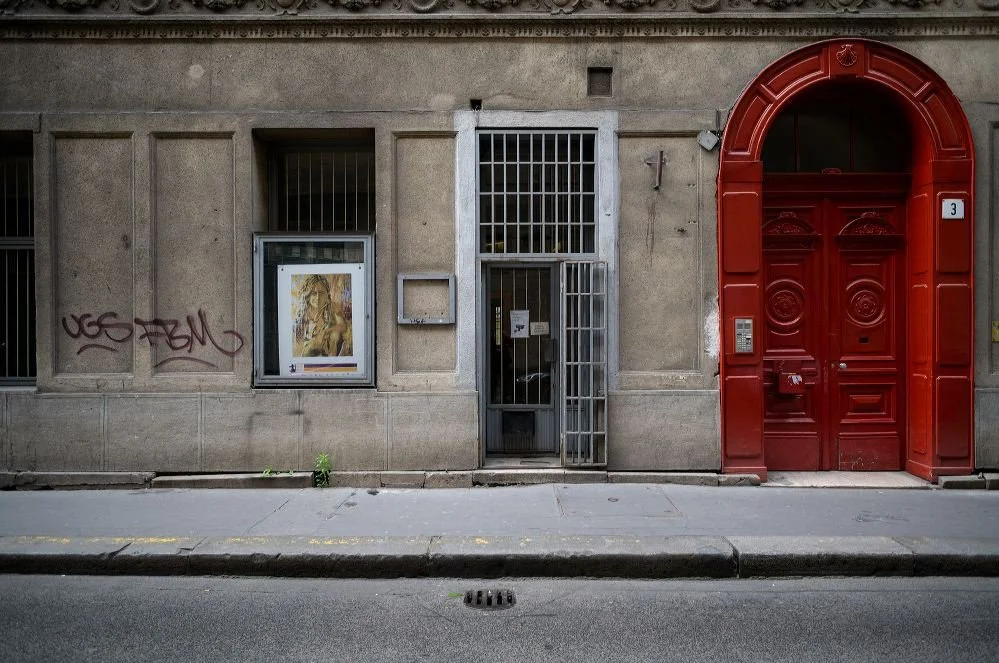
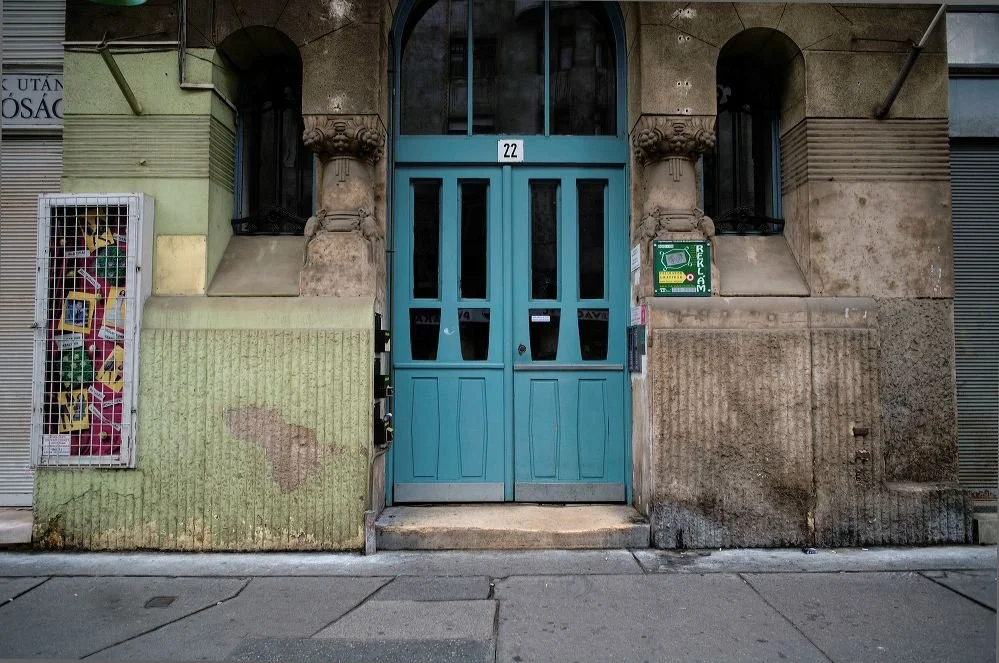
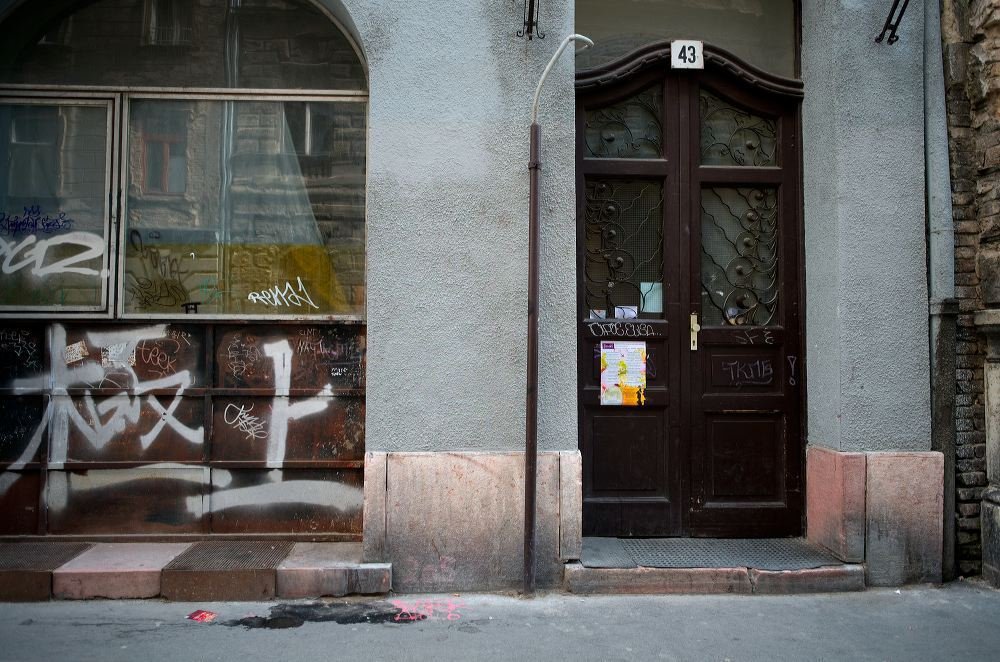
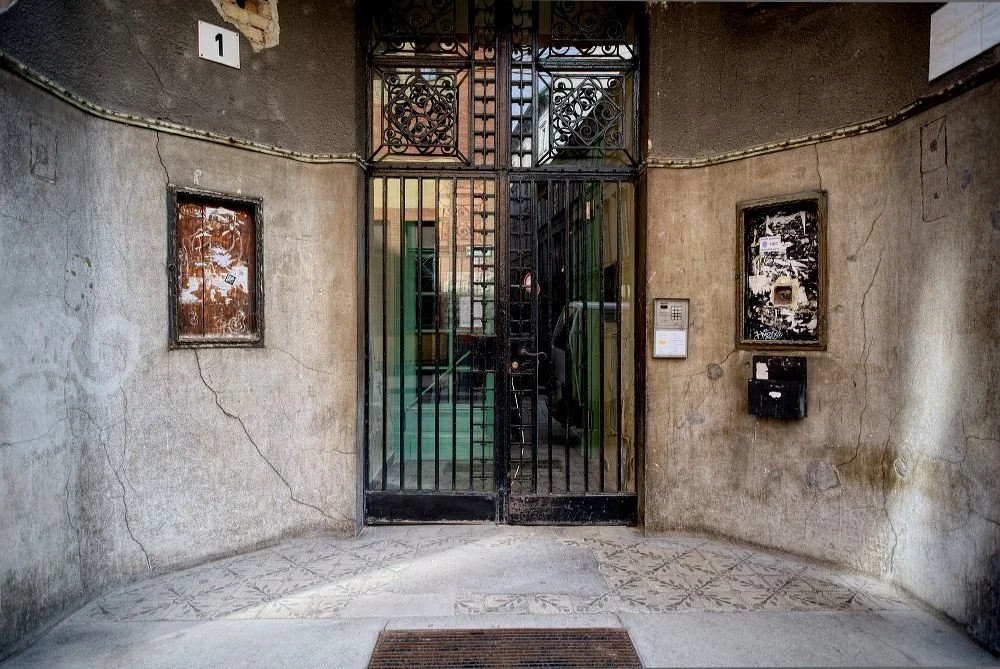
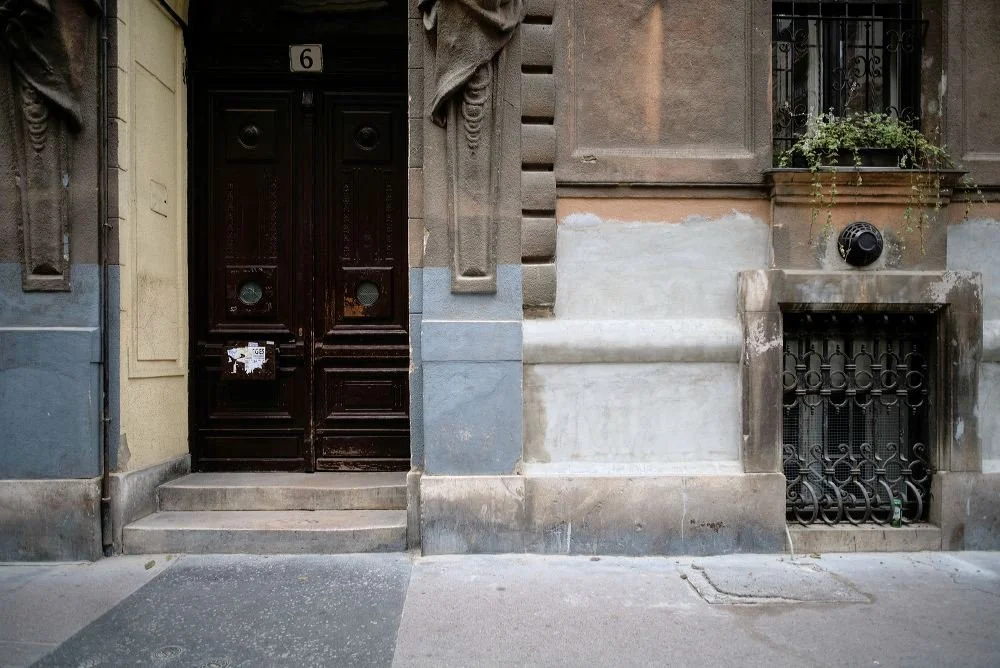
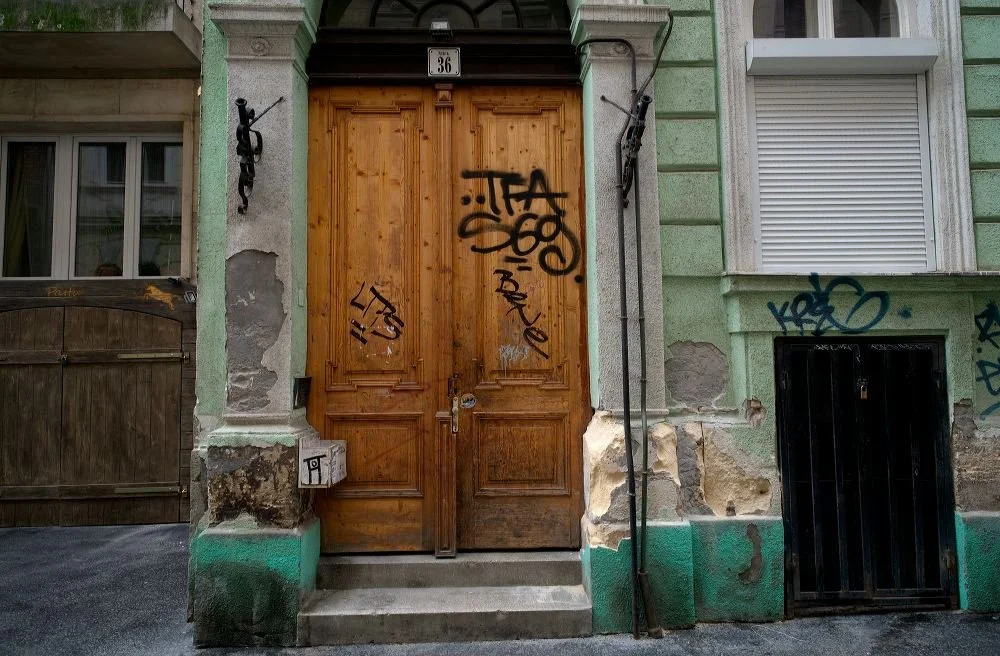
Budapest is home today to around 1,735,000 people. One of them is the Irish photographer Nigel Swann, who has been living in this fine city, on and off, for over ten years. On his daily walks around the inner districts, Nigel has photographed the entrances to hundreds of apartment blocks, their doors together with the letterboxes, doorbells, metal grating, advertisements, vitrines, graffiti, and façades in various states of disrepair. Many of these houses were built during the patriotic, optimistic construction boom of the 1880s and 1890s, others are early Art Deco masterpieces, while later buildings were the pioneering works of interwar Bauhaus disciples.
Nigel’s photographs of the entrances to these houses present us with openings in the hectic cityscape, inscribed with accumulated evidence of human inhabitation, but where individual lives are noticeable only in their absence: there are no people.
Unbeknown to him at the time he took the images, many of the houses were, seventy years ago, yellow-star houses , discovering lists of said houses on www. yellowstarhouses.org he revisited and photographed the locations.
From 21 June until late November 1944, all Budapest citizens defined as Jews by the race laws in force at the time were obliged to wear the yellow star, and to live under curfew in a designated house also marked with the yellow star. Across the city, there were almost 2,000 such yellow-star houses ( apartment blocks ) , which accommodated around 220,000 people for almost half a year, until the establishment of the two large ghettoes in the closing months of the war. Because the aim of this forced mass relocation was to concentrate the Budapest Jewish population in preparation for deportation, each family was allowed just one room.
The yellow-star houses were unique to Hungary and Budapest: nowhere else in Nazi- occupied Europe were houses reserved for Jews marked with the yellow star, and usually, these stars were made out of cardboard. This was, after all, intended as an interim measure, en route to the death camps.
Although around 1,600 former yellow-star houses are still standing and in residential use today, this fact was largely unknown until early 2014. Barely a handful of archival photographs of yellow-star houses remain: Hungarian Jews had had their cameras, radios and bicycles confiscated in April 1944, only the latest in a long series of humiliating acts of legislation. Historians of the Hungarian Holocaust have tended to focus, understandably, on the deportation of almost half a million Jews from the countryside in 57 days, between 15 May and 6 July 1944. After the war, the yellow-star houses were one of the subjects that remained off-limits, both publicly and in private, even within many families. Neither the victims nor the perpetrators wanted to talk.
Where barely any archival images or visible clues remain, what visual languages are available to portray acts of unspeakable, organised violence carried out against a large section of the community in a major modern metropolis? How can we read and understand the afterlife of atrocity in the contemporary urban environment? Nigel’s photographs provide one answer to these questions. They allow us to picture the human lives and deaths that these yellow-star house doors conceal.
Dr Gwen Jones
Open Society Archives, Budapest 4 December 2014